
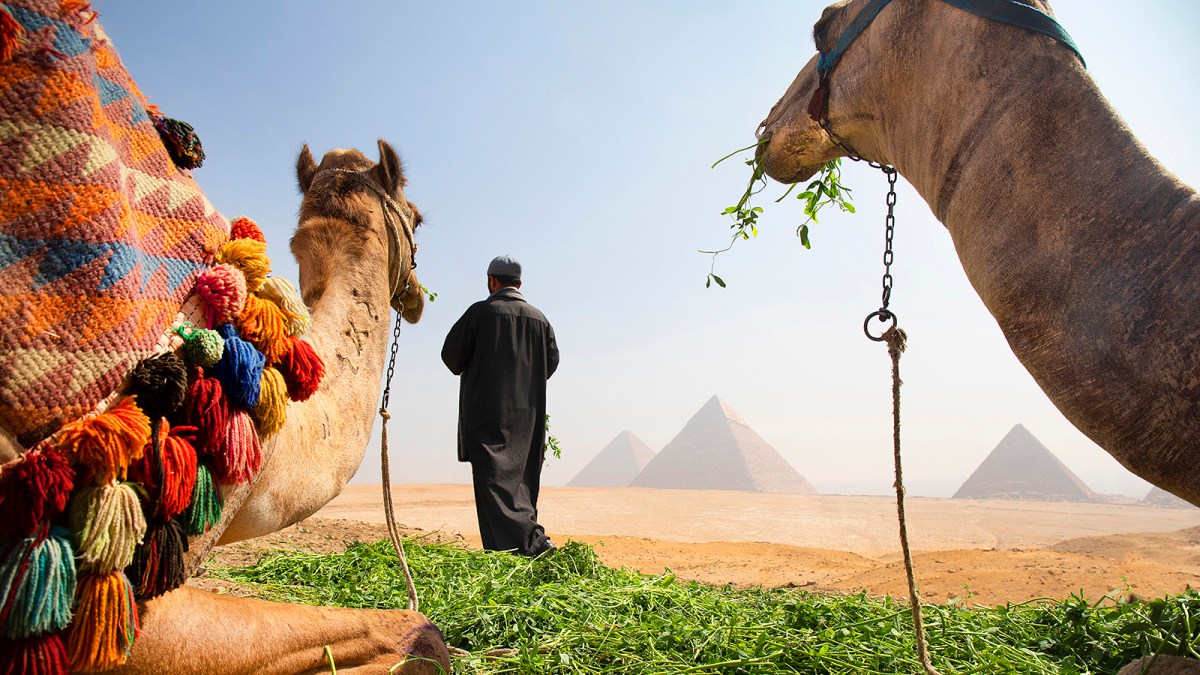

Egypt has been attracting tourists since the Romans arrived to marvel at the pyramids and cruise the Nile. The sites that pulled them across the Mediterranean 2,000 years ago still feature high on any itinerary today — and the country manages the wholly unusual feat of being both easily accessible and a bucket-list destination. The extraordinary achievements of the early Egyptians are the undoubted stars: rock-cut tombs in the Valley of the Kings and the Pyramids at Giza will wow any traveller. Nile cruises are as atmospheric and unmissable as they ever were.
While impressive, these blockbusters won’t be the things you remember the most. That will be the small, special moments you’ll experience every day here — tucking into the tastiest fruit, sourced from a Nile valley garden, wandering through a date palm grove, being invited to take a hookah pipe at a local café; and listening to the call to prayer as you watch the sun set over the Nile.
It’s well known that tensions have been running high in the Middle East, and Egypt shares a land border with both Israel and Gaza. It hasn’t been affected directly by the fighting, and the UK Foreign Office still considers the country’s tourist areas safe to visit. However, there are parts of the country it advises against all travel to, as well as all but essential travel. If you’re planning a holiday to Egypt, here’s what you need to know.
• Is it safe to travel to the Middle East right now?
Is it safe to travel?

A mosque in the city of Hurghada
GETTY IMAGES
Broadly, yes, and the tourist resorts are far away from Gaza. Sharm el-Sheikh is more than 200 miles away from the Gaza border; Hurghada even further. More generally, there is no travel advisory in place for popular tourist spots in Egypt such as Cairo, cities along the Nile like Luxor and Aswan, and resorts by the Red Sea such as Sharm el-Sheikh and Hurghada.
As with the other countries in the region, the UK Foreign Office warns of “ongoing hostilities”, adding that the situation “could escalate quickly and pose security risks”. Travel could be disrupted and there may be protests, so visitors are told to monitor local and international media for the latest information and to be vigilant and follow the instructions of local authorities if anything happens.
However, there are also some no-go areas. The Foreign Office is advising against all travel to the North Sinai Governorate, which includes the Rafah crossing, and within 20km of the Libyan border (except El Salloum, where it advises against all but essential travel).
It advises against all but essential travel to several other parts of the country, for example the northern part of South Sinai.
As with other countries in the world, the Foreign Office has warned that terrorists are very likely to attempt attacks in Egypt. The risk is heightened during public holidays and festivals, such as Christmas and Ramadan, and is particularly high around religious sites, large public gatherings and places frequented by foreigners. Stay vigilant and carry photo ID with you at all times.
In terms of safety on the ground, it pays to be vigilant. Protests take place frequently and foreigners taking part in political activities in the country could be detained or subjected to other measures.
The Foreign Office says: “Avoid large gatherings, demonstrations and protests as the situation could change quickly and without warning. Police have used water cannons, tear gas, birdshot and live ammunition as crowd control.”
At popular tourist spots, visitors can be harassed for money or to buy things. There’s also a risk of theft and mugging, even in taxis. Travelling as part of an escorted tour can help reduce the risks. If you are a victim of crime, you should contact the local tourist police who can help you make a report.
Public displays of affection can also be frowned upon.
What advice is there about boarding a Red Sea excursion?
There have been a few high-profile tourist submarine and boat excursion incidents in the Red Sea. A report by the Marine Accident Investigation Branch in early 2025 recommended: “Prospective customers are advised only to book live-aboard dive holidays through reputable vendors who can provide assurance about the safety standards applicable to the dive boat. On arrival on board, customers should request that the crew provide a thorough safety briefing before departure.”
Customers should always check crews are trained in case of an emergency; that escape routes are marked clearly with emergency lighting and do not contain lockable doors; that lifesaving equipment is in date and easy to find; and that fire detection systems and working extinguishers are in place.
While this advice is specific to live-aboard dive holidays, it should be applied to any boat excursions worldwide. Always make sure to organise appropriate travel insurance before travelling.
Is Cairo safe?
Yes, the Foreign Office is not advising against travel to Cairo. However, it’s a big and busy city so it’s still worth staying vigilant for petty crime and harassment.
Is it safe to travel to Sharm el-Sheikh?
Sharm el-Sheikh is one of Egypt’s most popular holiday resorts, attracting around 10 million tourists a year, according to official figures. The Foreign Office considers it safe to visit. Since it reopened to British tourists in October 2019, four years after a bomb exploded on a Russian plane carrying 224 passengers and crew, there have been extra safety checks. Security measures were increased at the Red Sea resort: x-ray scanners in hotels, security walls and high perimeter fences around the airport were installed.
Is it safe to travel to Hurghada?
Yes. The Foreign Office does not advise against travel to the Red Sea resort of Hurghada, which is known for its great diving and watersports.
• Best hotels in Hurghada
Can you drink alcohol in Egypt?
Egypt is an Islamic country. While attitudes are more relaxed in tourist resorts, customs can be very different elsewhere and more strict during Ramadan. Public drinking, for example, can lead to arrest — alcohol is only permitted in a licensed restaurant or bar.
Possession, use or trafficking of illegal drugs can lead to long prison sentences or even the death penalty. Visitors should be aware that what is legal in the UK may not be legal in Egypt. In 2017, for example, a British woman was jailed for three years for taking tramadol tablets into the country. Tramadol, an opioid painkiller, is a prescription drug in the UK but is illegal in Egypt.
What about taking photos in Egypt?
Be aware of what you’re photographing. Taking pictures of military property (strictly prohibited), embassies, government buildings, churches and even infrastructure such as railway stations can lead to arrest. If you want to photograph any Egyptian citizens, you must have written permission from them; photographing children is not permitted.
Taking or sharing photographs that are perceived to be damaging to the country’s image is also forbidden. Similarly, making strongly negative comments about the Egyptian government or its politics, including on social media, can lead to you being detained.
• Best all-inclusive hotels in Egypt
What are Egypt’s entry requirements?

On El Montaza Bridge in Alexandria
GETTY IMAGES
For entry into Egypt, you’ll need at least six months’ validity on your passport. You’ll also need to apply for a tourist visa to visit most of the country. These can be obtained online before you travel (valid for up to three months) or on arrival at dedicated desks inside the airport (valid for up to 30 days).
If you’re travelling to the resorts of Sharm el-Sheikh, Dahab, Nuweiba or Taba, you can get a free entry permission stamp upon arrival for stays of less than 15 days. You’ll have to get a visa if you want to stay longer or visit other places.
Is Egypt safe for female travellers?

Women should take care when travelling in taxis in Egypt
ALAMY
In general, yes, it is safe for female travellers. However, there have been reported incidents of sexual assault and harassment in the country, including some affecting minors. Most of the reported incidents have taken place in the Red Sea region and, according to the Foreign Office, are often committed by someone the victim had already met, including hotel workers and excursion staff.
The Foreign Office advises: “Female travellers should exercise caution when travelling alone, particularly at night, in buses, taxis and microbuses. If you are travelling on public transport, including microbuses, avoid being the last passenger left on board.”
Is Egypt safe for LGBT travellers?
It can be problematic for LGBT travellers. While homosexuality is not technically illegal in Egypt, charges under “debauchery” laws have been used to prosecute LGBT people in the past, according to the Foreign Office. Some were arrested in 2017 on “debauchery” and “sexual deviance” charges after waving a rainbow flag at a concert in Cairo, for example. Again, attitudes are often more relaxed in tourist areas, but public displays of affection are likely to cause issues.
• Safest countries for LGBT travellers
• Is it safe to go diving in the Red Sea?
• Best hotels in Egypt
https://www.thetimes.com/imageserver/image/%2Fmethode%2Ftimes%2Fprod%2Fweb%2Fbin%2Faf2e04da-820b-46db-b9d0-9511830ff0a2.jpg?crop=1600%2C900%2C0%2C0&resize=1200
2025-07-31 10:00:00
#safe #visit
0 Comment